What is a butterfly valve?
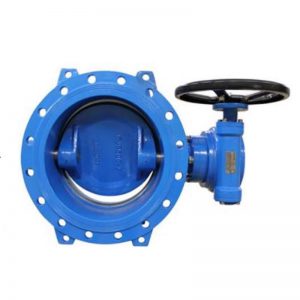
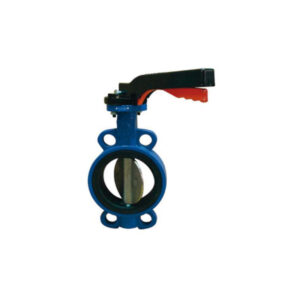
A butterfly valve is a quarter-turn rotary motion valve used to start, stop or regulate flow. Butterfly valves are of the quick opening type. A 90° rotation of the shaft can completely close or open the valve.
Large diameter butterfly valves are generally equipped with a reduction gear, where the handwheel is connected to the shaft through a reduction gearbox. This will reduce the force but at the same time reduce the speed of operation. This type of valve should always be installed in the open position. If the valve is closed during installation, the rubber seat will pinch against the valve disc and make it difficult to open.
TYPES OF BUTTERFLY VALVES
Depending on the type of body ends, butterfly valves are available in the following types.
LUG OR LUGGED VALVES
For butterfly valves we will introduce a new term that has not been used until now.

Types of Seats
Butterfly valves can be metal-to-metal seated, soft-seated or with a fully lined body and disc. The first picture is of a butterfly valve with a coated disc with a soft seat. Secondly, it is soft-seated with a metal disc and the third is a metal-to-metal seated valve.

The butterfly valve disc can be concentric or eccentric with the valve body and shaft. Three different types of disc are shown here with respect to the centre of the valve body.
Zero offset
Centred-shaft butterfly valve
Zero offser design is used for valves that are used in low pressure and temperature services. In this design, the disc and shaft is concentric with the valve body. In the open position, the disc divides the flow into two equal halves, with the disc in the middle and parallel to the flow.
This type of valve has a resilient seat. Sealing is achieved when the disc deforms the soft seat. There is friction between the disc and the seat during the complete operating cycle, which is the disadvantage of the zero offset or centred shaft valve.

Double Offset
Bi-centric butterfly valve
In the Double Offset design, the disc is offset from the centreline of the valve and also from the centreline of the body. This creates a cam action during operation that lifts the seal seat.
The double offset makes opening and closing smooth, as friction is only applied during the first few degrees of opening and the last few degrees of closing, approximately 10 degrees of opening and closing.
Triple Offset
Tri-excentric butterfly valve
In the Triple Offset design, the third offset is created by the design of the seat surface geometry. The seat is machined in an off-centred conical profile resulting in a right-angled cone. We can see it in the third picture with a small enlargement of the seat angle.
This ensures a frictionless opening and closing stroke throughout its travel. Contact is only made at the closing end point with the 90° angle acting as a mechanical stop; metal-seated butterfly valves use the triple offset or triple eccentric design.
DRIVES
The most common manual actuators for this type of valve are lever actuators with positioners, usually up to DN-200, and for larger diameters, where greater force is required to operate them, manual reducers.
The gear operator or reducer is nothing more than a gearbox which, applying the laws of physics, transmits the force we apply from the handwheel to the valve shaft to open/close, as if it were the power steering of our car applied to a valve.

DISMANTLING REELS
When installing large diameter butterfly valves, it is common practice to mount telescopic disassembly spools next to the valves to facilitate valve disassembly.
They can be made of ductile cast iron, carbon steel or stainless steel.
- The seals are usually made of EPDM or NBR.
- The most commonly used screws are made of stainless steel.
- The usual protective paint is Epoxy.
Applications
Butterfly valves are used in many types of services and fluids, they also work well in slurry applications. They can be used in liquids, steam, cryogenics, cooling water, air, gases, fire suppression, pharma, food and vacuum services.
The butterfly valve is used in all types of industrial applications, including high pressure and high temperature service.
Advantages
The butterfly valve is suitable for large diameter applications due to its compact and lightweight design that requires considerably less space compared to other valves.
They are fast-operating, requiring little time to open or close.
Maintenance costs are generally low compared to other types of valves.
The pressure drop across a butterfly valve is small.
The non-metallic seated valve can be used in chemical and corrosive media.
Disadvantages
They do not serve to regulate the fluid
There is a possibility of cavitation and choking as the disc is always in the middle of the flow. Turbulent flow can affect the movement of the disc.
The main advantage of a butterfly valve is the size and cost of manufacture over other types of valves.