What is a check valve?
They are those that allow the fluid to pass in one direction only.
The valve that prevents the return of fluid in a piping system is known as a check valve. It is also known as a non-return valve. The pressure of the fluid passing through the pipe opens the valve, while any reversal of flow will close the valve. Operation will vary depending on the type and mechanisms of the valve.

There is a variant of check valves called foot valves.
FOOT VALVES incorporate a strainer at the fluid inlet and are used in pump suction.

Types of check valves
The type of closure will indicate each type of valve. The most common types of check valves are:
- CLAPPER RETENTION
- SEAT RETENTION or LIFT CHECK
- DISC RETENTION
- DOUBLE-PLATE RETENTION
- BALL RETENTION
- DIAPHRAGM RETENTION
- TILTING DISC TYPE RESTRAINT
- FOOT OR SUCTION TYPE RETAINER
CLAPPER RETENTION:
This valve operates when there is flow in the line and closes when there is no flow. Turbulence and pressure drop across the valve are very low. Disc and seat designs can be metal-to-metal or metal-to-elastomer.
The angle between the seat and the vertical plane is known as the seat angle and varies from 0 to 45 degrees. Generally, seat angles are in the range of 5 to 7 degrees. Larger seat angles reduce the disc travel, which results in rapid closure, thus minimising the possibility of water hammer. A vertical seat has an angle of 0 degrees. The swing check valve allows full unobstructed passage and closes as pressure decreases. It is normally installed in combination with gate valves because they provide a low head loss combination.
A basic swing check valve consists of a valve body, a cover and a disc which is connected to a hinge.

APPLICATIONS AND RECOMMENDATIONS
Where full flow is required, with little head loss. Where there are infrequent changes of flow, for service in pipelines with gate valves. Horizontal or vertical installation. Recommended for water and clean fluids.
VARIATIONS
Wafer type, with By-pass, with spring, with counterweight (to help closing), metal seals, rubber seals. They can also incorporate hydraulic damping systems to close slowly to avoid water hammer.

LIFT CHECK (LIFT CHECK)
The design of a poppet check valve is similar to a globe valve.

Seat check valves are particularly suitable for high pressure and steam services where the flow velocity is high. The disc is perfectly seated on the seat with full contact. They are suitable for installation in horizontal or vertical pipelines with upward flow.
When flow enters from under the seat, a disc is lifted off the seat by the upward flow pressure. When flow stops or reverses, backflow and gravity pull the disc downward to settle on the seat. It is commonly used in piping systems that use globe valves as a flow control valve.
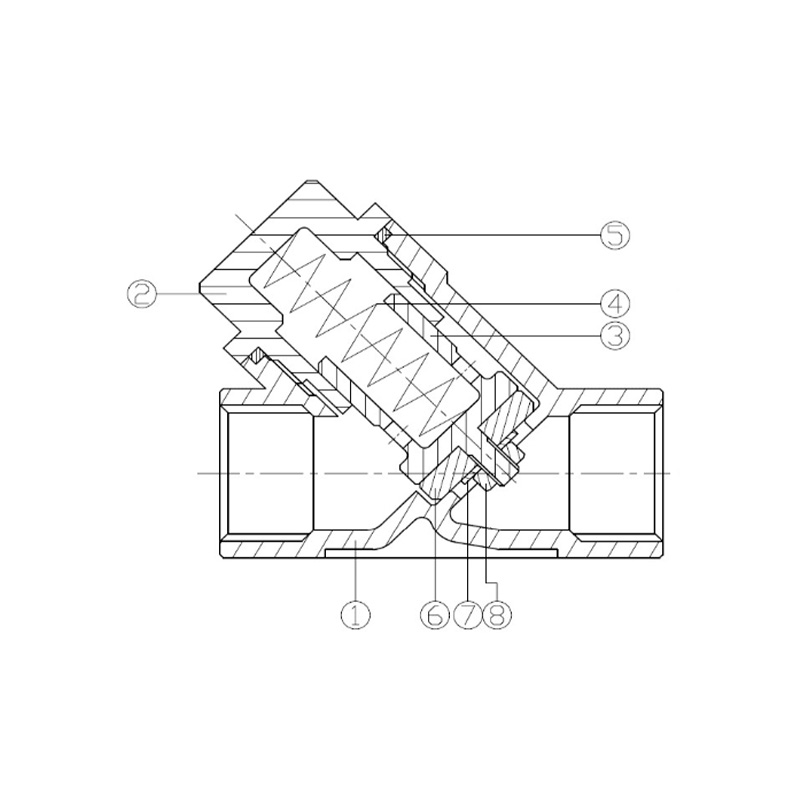
In the pictures we can see the seat or piston type check valve. This type of valve provides superior sealing characteristics to swing check valves. Some designs use a spring to retain the disc in the closed position. This will ensure that the valve will allow flow only when there is sufficient pressure in the direction of flow.
APPLICATIONS AND RECOMMENDATIONS
Suitable when there are frequent changes of circulation in the pipeline. For use in conjunction with globe and bellows valves. When pressure drop is not a problem. Particularly suitable for steam and hot water installations. When the fluid velocity is high. They have a fast close response.
VARIATIONS
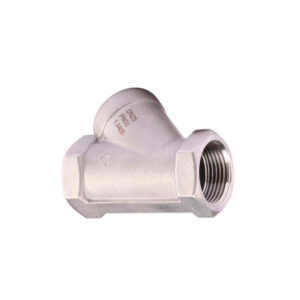
Angular type, Y type, with and without spring.

DISC RETENTION
This type of check valve has a disc placed in the centre of the valve orifice, which moves in the same direction as the fluid through guides, leaving the passage in the direction of flow and preventing spring-assisted return.

APPLICATIONS AND RECOMMENDATIONS
This type of valve is one of the most suitable for handling steam and other fluids. We must pay special attention to the pressure drop, which is very high.
Being a compact model, it offers a wide variety of possibilities with the materials of construction (stainless steel, monel, titanium, hastelloy, etc.). Combinations of body and disc are also possible.
Another of the technical advantages it offers is the possibility of incorporating soft seats such as: Epdm, Viton, Ptfe, etc.
Due to its construction, it is also suitable for high pressures and temperatures.
Their connection is usually wafer type, although sometimes they can be lug or flange type. They can be mounted horizontally and vertically, and the spring hardness can be selected for special applications.
DOUBLE DISC or DOUBLE DISC RETAINER
Its operating system is based on two hinged half discs, joined by a central shaft. When they receive the fluid, they open, allowing it to circulate and close when the fluid returns. They have springs to assist closure, consisting of metal discs against a seal, which is usually made of nitrile and is housed in the body of the valve.
The double disc check valve is suitable for use in liquids and gases at low pressure. Its lightweight and compact construction makes it a good choice when space is at a premium. It is 80 to 90% lighter than the conventional full body check valve. It is often used in systems using butterfly valves. The installation and maintenance cost is very low compared to other types.

APPLICATIONS AND RECOMMENDATIONS
Double disc (split disc or duo-check) check valves are a very common application in clean water pump drives. Their small footprint and low cost make them one of the most important applications. This type of valve has become the alternative to the swing check with integral flanges, saving space and materials. This family of valves has a wide range of materials to combine. This type of check valve is penalised by having a significant pressure drop. It is also not recommended if the fluids are not clean, as in the open position the central valve rib is always preventing the fluid from passing through. They can be installed horizontally and vertically. They are hermetically sealed.
Another of the technical advantages it offers is the possibility of incorporating soft seats such as: Epdm, Viton, Ptfe, etc.
Due to its construction, it is also suitable for high pressures and temperatures.
Their connection is usually wafer type, although sometimes they can be lug or flange type. They can be mounted horizontally and vertically, and the spring hardness can be selected for special applications.
BALL RETENTION
What is a ball check valve?
A ball check valve works by means of a ball that moves up and down within the valve body. The seat is machined to fit the ball and the chamber is tapered to guide the ball into the seat to seal and stop a reverse flow.
If the pump capacity is not sufficient, it is possible to choose a lighter ball, and if water hammer occurs when the pump stops, it can be solved by selecting a heavier ball.
Ball check valves are often preferred for use in low maintenance pumping stations. As their description indicates, they have a ball inside the valve body which moves inside the valve body in a Y-shape, moving away when the fluid arrives and closing the orifice when the fluid wants to return...

APPLICATIONS AND RECOMMENDATIONS
The most important application of this type of retention is in wastewater treatment plants (WWTP). Due to their design, they are never blocked due to sludge, liquids with solids, etc.
The inner ball is usually covered with a rubber-like material, which floats and rotates while the fluid circulates and is self-cleaning. There are also ball valves with a metal ball and seat for the petrochemical industry.
They are normally used in installations where gate valves with resilient sealing are installed. They are very suitable for installations with full flow and low pressure drop. Their greatest enemies are water hammer, high temperatures and high pressures. That is why we recommend them for installations with moderate pressure.
As with resilient-seated gate valves, these are usually coated internally and externally with epoxy paint.
FOOT CHECK VALVE
A foot valve is a type of check valve that is usually installed on a pump or at the bottom of a pipe (hence the name). Foot valves act like check valves, but have an open end with a strainer to prevent dirt from entering the line. The valve opening is designed to be larger than the line itself, minimising head loss.
Foot valves can be found in ponds, swimming pools and almost anywhere there is a pump. These special valves allow the pump to remain primed, allowing liquid to flow in, but preventing it from flowing out. The screens or filter baskets that cover the valve opening tend to become clogged over time, especially in ponds and wells. It is important to check and clean valves regularly for optimum performance.
.

The foot valve consists of two parts: check valve and strainer. The materials of construction of the valves can be iron, steel, brass, bronze, stainless steel, plastic, etc. Strainers can also be made of different materials. For their selection we will choose the most suitable for the fluid of the vehicle, the connections are usually threaded for small diameters and flanges for larger diameters.